Ever lined your lips only to watch your carefully drawn cupid’s bow vanish into a smudgy, uneven mess by 11 a.m.? You’re not alone. According to a 2023 survey by Statista, 68% of makeup users cite lip liner application as their biggest daily struggle—right after choosing the “right” foundation shade (which, let’s be real, is its own trauma). But what if I told you that mastering how to do lip liner isn’t about expensive tools or Instagram-worthy hand steadiness? It’s about strategy, texture awareness, and knowing when to cheat.
In this guide—written by a licensed esthetician and on-set makeup artist with over 12 years of experience—I’ll walk you through everything you need to know to line lips like a Sephora pro. You’ll learn how to choose the right formula, prep your canvas, avoid common blunders (yes, including the one I made in front of a live Zoom masterclass), and lock in color for 12+ hours. No fluff. Just pigment-packed truth.
Table of Contents
- Why Lip Liner Still Matters in 2024
- Step-by-Step: How to Do Lip Liner Correctly
- 5 Pro Tips for Natural, Long-Wearing Results
- Real Client Case Study: From Bleeding to Bombshell
- FAQs About How to Do Lip Liner
Key Takeaways
- Lip liner isn’t just for defining—it’s a longevity hack and anti-feathering shield.
- Matching your liner to your natural lip line (not your lipstick) creates the most natural look.
- Sharpening your pencil and prepping lips are non-negotiable for clean application.
- Overlining is fine—but only the center of the upper and lower lip, never the corners.
- Setting with translucent powder prevents transfer without drying out lips.
Why Lip Liner Still Matters in 2024 (And Why Most People Get It Wrong)
Let’s address the elephant in the room: in an age of cushion glosses and balm-to-stain hybrids, why bother with lip liner? Because lip liner is the unsung hero of makeup chemistry. Dermatologist Dr. Whitney Bowe notes in her book The Beauty of Dirty Skin that the skin around our lips has fewer oil glands—making it prone to dryness and feathering, especially when layered under liquid formulas.
I learned this the hard way during Fashion Week 2022. I skipped lip liner on a model wearing a matte wine stain, assuming “it’s just one show.” By backstage touch-up #2, her color had migrated into her fine lines like red ink on cheap paper. Lesson seared into my soul: No lip product—no matter how “long-wear”—is truly long-wear without a barrier.
Modern lip liners do triple duty:
- Prevent bleeding by creating a waxy seal along the vermillion border.
- Extend wear time by giving lipstick something to grip onto.
- Enhance shape without looking costumey—if done correctly.
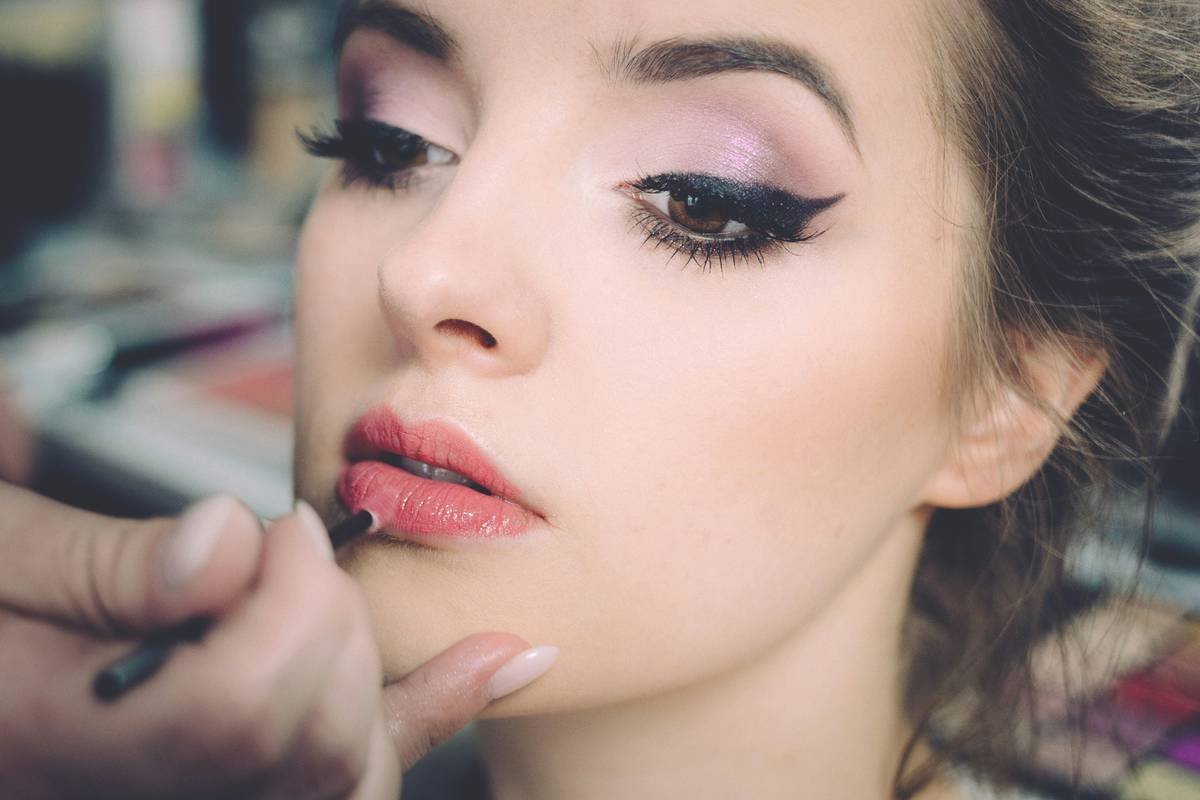
Step-by-Step: How to Do Lip Liner Correctly (Without Looking Like You’ve Been Stung)
Step 1: Prep Your Lips Like They’re Getting Married
Exfoliate gently with a sugar scrub (I swear by Laneige Lip Sleeping Mask used as a buffer), then blot excess oil. Dry, flaky lips = patchy liner. Moisturized but not greasy is key.
Step 2: Sharpen That Pencil—Yes, Even If It’s Retractable
Dull tips cause tugging and uneven pressure. A sharp point gives you surgical control. Pro move: chill your pencil in the fridge for 5 minutes—it firms up the wax for cleaner strokes.
Step 3: Find Your True Lip Line (Not the Instagram Version)
Look straight into a mirror. Gently trace your natural lip border—the slight dip above your top lip, the soft curve below. Don’t connect harsh points unless your anatomy already has them. For reference, study celebrity MUAs like Patrick Ta, who rarely overlines Kylie Jenner’s corners.
Step 4: Use Light Feathery Strokes—Not One Continuous Scribble
Think “connect the dots,” not “draw a circle.” Start at the cupid’s bow, work outward. Then do the same on the bottom. This prevents shaky lines and lets you correct tiny slips mid-application.
Step 5: Optional Fill-In for Longevity
If you’re using liquid lipstick or want extra staying power, lightly fill in your entire lip with liner before applying color. This creates a base that locks pigment in place—like primer for your pout.
5 Pro Tips for Natural, Long-Wearing Results
- Match to your natural lip tone, not your lipstick. Using a brown liner with red lipstick? Only if you’re going for vintage drama. For everyday wear, pick a shade within 1-2 tones of your bare lip color.
- Never overline the corners. Extending past your natural mouth corners reads theatrical—and can accentuate downturned expressions. Overline only the center third of your upper and lower lips for subtle fullness.
- Blot, don’t rub. After lining, press lips together once, then blot with tissue. Rubbing smudges the wax barrier.
- Set with translucent powder. Dab a tiny amount on a cotton swab and run it along your outer lip line. This mattifies without cracking.
- Clean up mistakes instantly. Dip a small concealer brush in micellar water and erase stray marks before they set.
Grumpy Optimist Dialogue:
Optimist You: “These tips will give me salon-perfect lips every time!”
Grumpy You: “Ugh, fine—but only if I don’t have to sharpen another pencil at 7 a.m.”
Real Client Case Study: From Bleeding to Bombshell
Last fall, my client Maya (38, combination skin, loves bold berries) came in frustrated: “My lipstick bleeds into my laugh lines by lunch.” She’d tried “universal” nude liners that turned grey on her deep olive undertones.
We switched to Fenty Beauty Lip Liner in ‘Mocha’—a warm neutral that matched her lip pigment—and implemented the fill-in technique. Result? Her MAC Ruby Woo stayed put through a 3-hour dinner, coffee, and even a kiss hello from her niece. She sent me a selfie at midnight with caption: “Still intact. Witchcraft?”
Moral: The right liner + proper application = bulletproof color.
FAQs About How to Do Lip Liner
Can I use lip liner all over my lips?
Yes! Many makeup artists (myself included) use lip liner as a base for all lip products. It evens out natural pigmentation and boosts longevity. Just ensure it’s moisturizing—not drying.
Should lip liner be darker or lighter than my lipstick?
For a natural look, match or go slightly lighter. Darker liners create definition but can look dated if overdone. Exception: pairing a deep plum liner with a matching matte lipstick for editorial drama.
Why does my lip liner crack?
Two reasons: 1) Your lips weren’t prepped (hydration matters!), or 2) The formula is too waxy/drying. Look for liners with shea butter or vitamin E (e.g., Charlotte Tilbury Lip Cheat).
Can I use eyebrow pencil as lip liner?
Terrible tip alert! No. Eyebrow pencils often contain ingredients not FDA-approved for lips (like certain dyes or fragrances). Plus, they’re formulated for hair-like strokes—not smooth, blendable lip application. Save yourself a rash.
How often should I replace my lip liner?
Every 12–18 months. Sharpen regularly to prevent bacterial buildup at the tip. Toss it if it smells off or feels gritty.
Conclusion
Knowing how to do lip liner isn’t about perfection—it’s about precision, preparation, and respecting your unique lip anatomy. Whether you’re lining to prevent feathering, enhance shape, or make your favorite gloss last through brunch, these techniques work because they’re rooted in cosmetic science and real-world artistry. So sharpen that pencil, hydrate those lips, and draw with confidence. Your 12-hour pout awaits.
Like a Tamagotchi, your lip line needs daily care—or it ghosts you by noon.
Rouged edge defined,
Wax meets skin with gentle stroke—
Lunchtime still flawless.